

Best Trees for Building a Tree House: Strength, Safety & Stability
By James – Tree House Specialist
Building a tree house is more than just a fun project—it’s a blend of engineering, creativity, and a deep understanding of nature. The foundation of every great tree house is, of course, the tree itself. Choosing the right tree is the single most important decision you’ll make. A strong, healthy, well-rooted tree ensures safety, longevity, and stability for anyone who climbs up to enjoy the space. As a tree house professional, I’ve spent years studying tree behavior, growth patterns, and structural strength, and I can tell you with confidence that not all trees are suitable for supporting a structure.
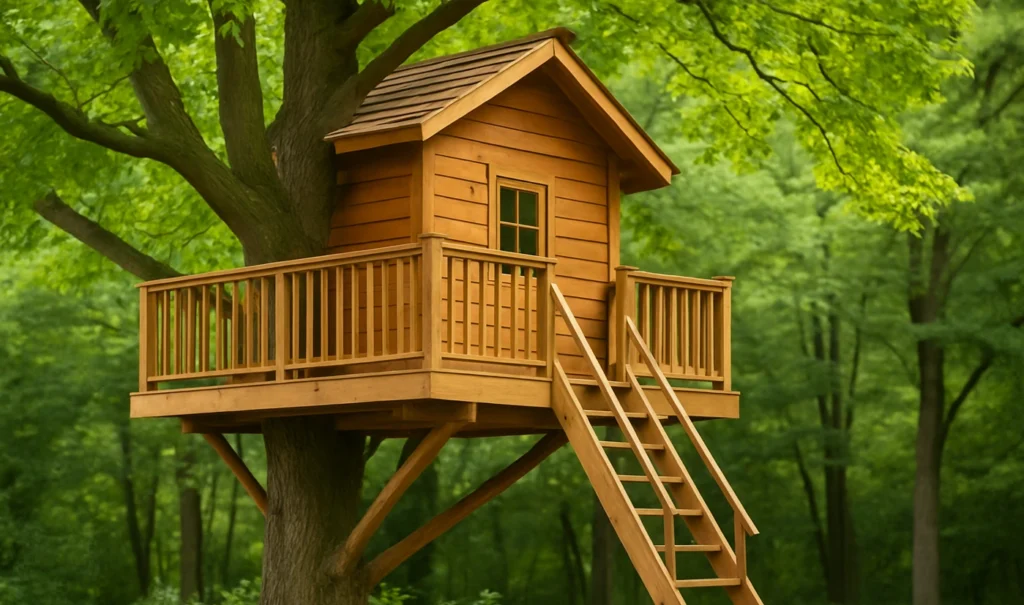
The best tree house trees share a few key traits: strong wood density, deep root systems, minimal disease risk, and long life spans. These characteristics determine whether a tree can hold weight safely, withstand weather changes, and continue growing without compromising the structure. Before anything is built, a thorough inspection of the tree’s health, trunk diameter, and branching pattern is essential. A tree may appear strong on the surface but still have internal decay that undermines its load-bearing ability.
Oak trees are considered some of the finest choices for tree houses. Known for their exceptional strength and deep root networks, oaks offer reliable support for platforms, beams, and bolt systems. Their thick branches grow in predictable patterns, making it easier to design around them. Oak wood ages well, resists breakage, and provides the stability needed for multi-level or larger tree houses.
Maple trees are another excellent option. Both sugar maples and red maples have sturdy trunks and branching systems capable of supporting moderate-sized structures. They grow relatively straight, have reliable wood density, and maintain stability even in windy conditions. Their vibrant leaves also create a beautiful canopy, offering a naturally shaded tree house environment.
Douglas firs and other strong conifers can work remarkably well, especially for lightweight or elevated structures. These trees grow tall, straight, and extremely strong. The key is choosing a fir with a wide enough trunk and spacing the supports carefully to avoid damage to the bark. Fir trees hold up well in variable weather and maintain consistent strength throughout their lifespan.
Beech trees are known for their smooth bark, expansive canopies, and solid wood structure. They are incredibly stable and resistant to pests, which makes them a dependable long-term choice. Their broad branches allow for creative and sprawling tree house designs that blend naturally into the canopy.
Cypress and cedar trees, particularly in certain regions, also make solid foundations. They resist rot, repel insects, and remain durable for decades. Their root systems develop deeply in well-drained soil, making them reliable for elevated structures that require strong anchoring.
While these species are among the best, no tree is suitable unless it is healthy. Before selecting a tree, you should look for signs of vitality: strong bark, consistent leaf growth, absence of fungus or mushrooms at the base, and no large dead limbs. A certified arborist can examine the tree internally if you have any doubts, ensuring your structure is built on a sound foundation.
Another factor to consider is the tree’s age and trunk diameter. Young trees are flexible but not strong enough to support weight. Older trees are strong but may conceal internal decay. Ideally, a tree should have a trunk diameter of at least 30–40 cm for a small tree house, and significantly more for larger designs. Wider spacing between major branches offers more flexibility for constructing platforms and support beams.
As exciting as the design process is, you should also plan realistically for the financial side of the project. Tree house materials, labor, hardware, and engineering all vary in price depending on complexity. Many homeowners explore resources that outline average tree house cost to better understand what goes into the investment. Guides like this provide helpful secondary information about pricing ranges, materials, and factors that influence total budget.
Once you’ve chosen the right tree, the rest of the project becomes easier and safer. A strong foundation ensures your tree house remains secure through storms, seasonal changes, and years of use. When built correctly, a tree house becomes a timeless structure—part adventure, part relaxation spot, and part architectural wonder deeply connected to nature.
Whether you’re planning a simple platform for your kids or a full-scale elevated retreat, selecting the right tree is the most critical first step. Respect the tree, protect its health, and build with care, and it will support your dream space for generations.


